info@qcnightvision.com

NIGHT VISION
SOLUTIONS

01 ANALOG NIGHT VISION
02 THERMAL IMAGING
03 FUSION SYSTEMS
MOVE TO EXPLORE

MANUFACTURING / OEM / SUPPLY

Professional Night Vision Device Supplier

QCNV provides night vision devices, image intensifier tubes, and OEM/ODM solutions for distributors, brands, system integrators, and project buyers. From product configuration and customization to bulk supply and long-term cooperation, we support different business models with stable manufacturing and technical expertise.

01
CUSTOMIZATION

OEM & ODM
Night Vision Solutions

Build night vision products around your brand, target market, and technical requirements. From existing product customization to project-based development, QCNV supports flexible OEM and ODM cooperation for B2B customers.

+ Private Label & Branding
+ NVG & IIT Configuration
+ Housing, Optics & Accessories
+ Custom Packaging & Documentation
+ Project-Based Product Development
EXPLORE OEM & ODM
02
B2B SUPPLY

NVG & IIT
Supply Partnership

Flexible supply solutions for distributors, brands, integrators, assemblers, and project buyers. Source complete night vision systems and image intensifier tubes through one long-term supply partner.

+ Complete Night Vision Devices
+ Gen2+ & Gen3 Image Intensifier Tubes
+ Flexible Performance Configurations
+ Wholesale & Bulk Procurement
+ Repeat Orders & Long-Term Supply
START A PARTNERSHIP
15+
YEARS
Night Vision Experience
CE · RoHS · FCC
CERTIFIED
International Compliance
200+
PARTNERS
B2B Cooperation Worldwide
RETURN
& EXCHANGE
After-Sales Policy Support
5-Step NVG Quality Control

Night Vision Goggles Quality Control

STEP 01

Component & IIT Inspection

Quality control begins before assembly. Critical components are inspected to confirm condition, compatibility and specification before entering the production process.

+ Image Intensifier Tube Inspection
+ IIT Specification Verification
+ Housing & Mechanical Component Check
+ Lens & Optical Component Inspection
+ Electronic Component Check
+ Cleanliness & Surface Inspection
STEP 02

Precision Assembly & Tube Matching

Components are assembled with attention to optical alignment, mechanical fit and tube compatibility to maintain consistency between finished night vision systems.

+ IIT Installation
+ Tube Matching
+ Optical Alignment
+ Lens Installation
+ Mechanical Fit Verification
+ Assembly Cleanliness Check
STEP 03

Optical Performance Testing

Optical performance is checked and calibrated after assembly to verify image quality, focus and optical alignment before the device moves to final inspection.

+ Resolution Check
+ Focus Calibration
+ Diopter Adjustment Check
+ Image Quality Inspection
+ Dark Spot / Blemish Inspection
+ Collimation Verification
STEP 04

Reliability Testing

Key operating functions are checked under defined test conditions to identify potential stability and reliability issues before products are approved for shipment.

+ Power Function Test
+ Battery Compartment Check
+ Control & Switch Verification
+ Operating Stability Check
+ Housing & Interface Inspection
+ System Function Verification
STEP 05

Final Inspection Before Shipment

Each completed device receives a final outgoing inspection covering function, appearance, configuration, accessories and order completeness before packaging and shipment.

+ Final Device Function Check
+ Focus & Control Verification
+ Housing Appearance Inspection
+ Product Configuration Confirmation
+ Accessories & Packaging Check
+ QC Record Verification
01
+ QC PROCESS IMAGE Add inspection photo later
QUALITY YOU CAN VERIFY

Quality Control
Beyond Visual
Inspection

Quality assurance is not only about whether a device powers on. Product identification, tube information, calibration, final inspection and QC records help make each order easier to verify and manage.

01

Serial Number Traceability

Product identification supports order, inspection and after-sales tracking.

02

IIT Specification Verification

Image intensifier tube configuration and specifications are verified before delivery.

03

Optical Calibration Record

Key optical adjustments and performance checks are completed during the QC process.

04

Final Function Inspection

Finished devices are checked again before packaging and shipment.

05

QC Documentation

Inspection information supports B2B order management and quality verification.

QC INSPECTION RECORD
+ QC SHEET / TEST REPORT Add QC documentation image later
Comparative Test

See the Difference: Real Tube Performance

REAL-WORLD IIT COMPARISON

QCNV IIT vs Other IIT

Compare real-world image quality under the same scene and viewing conditions. Look beyond a single specification and examine usable low-light detail, image noise, edge clarity, scene contrast and bright-source handling.

ANALOG VS DIGITAL

REAL IIT vs DIGITAL NV

See how real image intensification and digital night vision render the same scene. Compare low-light detail, image texture, contrast and overall scene readability under practical viewing conditions.

REAL IMAGE UNDER CHANGING AMBIENT LIGHT

LOW-LIGHT PERFORMANCE

Observe how night vision imaging changes as available light decreases from urban illumination to moonlight, starlight and deep shadow. Compare usable detail, contrast and scene visibility across four different light conditions.

A QCNV IMAGE INTENSIFIER TUBE
← DRAG TO COMPARE →
B OTHER IIT
IMAGE A QCNV IIT
IMAGE B OTHER IIT
Night vision image under urban light
01 URBAN LIGHT
AMBIENT LIGHT

Urban Light

Observe contrast, highlight control and surrounding detail with artificial ambient light available.

Night vision image under moonlight
02 MOONLIGHT
NATURAL LIGHT

Moonlight

Look for terrain texture, background separation and usable detail under moderate natural illumination.

Night vision image under starlight
03 STARLIGHT
VERY LOW LIGHT

Starlight

Examine retained object detail, visible image noise and separation from the background.

Night vision image in deep shadow
04 DEEP SHADOW
MINIMAL AMBIENT LIGHT

Deep Shadow

Look for retained outlines, background information and overall readability in extremely dark areas.

MORE AMBIENT LIGHT
LESS AMBIENT LIGHT
IMAGE QUALITY GUIDE

WHAT TO LOOK FOR

A useful night vision comparison is not just about which image looks brighter. Examine the parts of the scene that affect real observation and recognition.

01

Low-Light Detail

Look into dark areas and low-contrast backgrounds. Better usable detail makes objects and terrain easier to distinguish.

02

Image Noise

Compare visible grain and scintillation, especially in darker areas where available light is limited.

03

Edge Clarity

Check branches, structures, object outlines and fine details toward the outer area of the image.

04

Scene Contrast

Observe how clearly terrain and objects remain separated from backgrounds with similar brightness.

05

Light & Halo Control

Look around bright sources to see how much glare or halo interferes with nearby scene information.

06

Scene Readability

Consider the complete image and how much useful information remains visible across the overall scene.
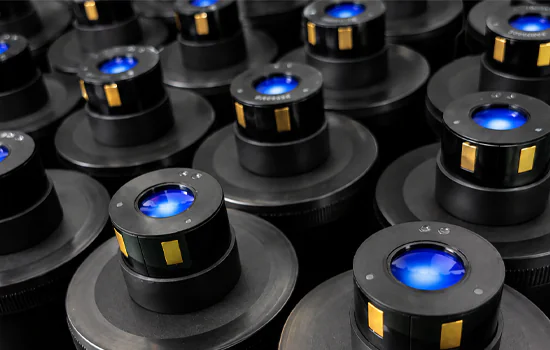
The power of night vision.

Night Vision Goggles Manufacturer FAQ

A: Minimum 0.001lux ambient light (moonlight/starlight) is required, and purely dark environment needs to be used with infrared supplemental light device.

A: Self-developed high-sensitivity three-generation intensifier tube, life expectancy ≥ 15,000 hours, support anti-glare protection.

A: All-metal shockproof structure, anti-noise algorithm, anti-electromagnetic interference, no red exposure mode, stealth operation.

A: 72lp/mm resolution + dynamic noise reduction technology, foggy/smokey environment penetration increased by 40%.

A: Provide depth customization of field of view (40°–65°), magnification (1X–7X), and diopter adjustment.

BEFORE YOU BUY

Night Vision Buying Guides

01 APPLICATION

What will you use it for?

Start with the application. Observation, hunting, navigation, outdoor use and professional projects may require different device configurations.

02 DEVICE TYPE

Monocular or binocular?

Consider field of view, weight, comfort and how the system will be used before choosing a monocular or binocular setup.

03 IIT

Gen2+ or Gen3?

Select the image intensifier tube according to target performance, available light conditions, application and budget.

04 PERFORMANCE

SNR, Resolution or FOM?

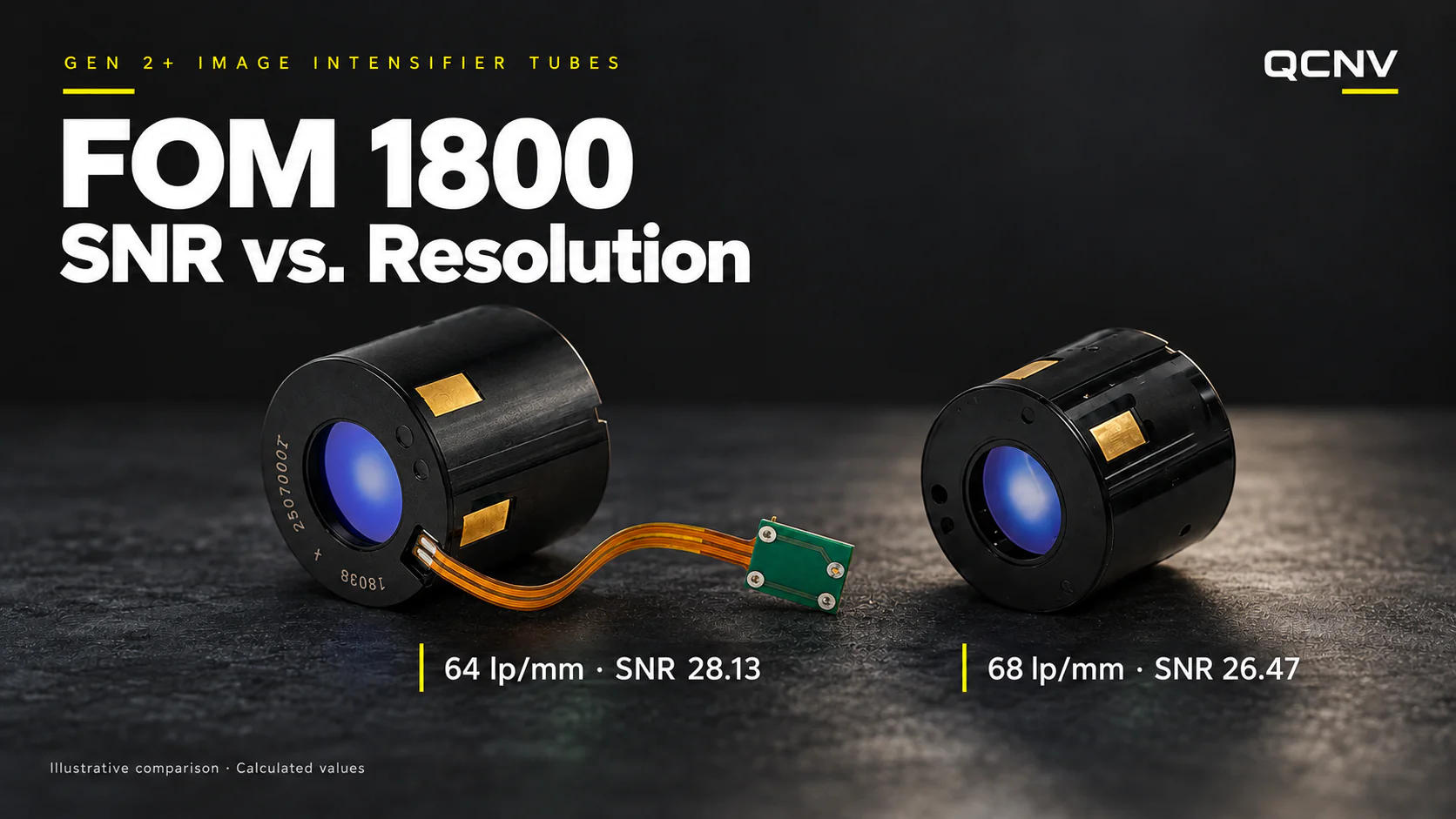
Do not judge a tube by one number alone. Evaluate SNR, resolution, FOM and real-world image quality together.

05 BUDGET

Device + tube configuration

Your total system cost depends on both the housing and IIT. A balanced configuration often provides better value than focusing on a single component.

06 SUPPORT

What happens after purchase?

For B2B buyers, long-term supply, replacement parts, warranty support and repeat-order availability matter as much as the initial purchase.

NEED HELP CHOOSING? Not sure what configuration fits your project?

let’s fight together

drop us a line