QCNV IMAGE INTENSIFIER TUBES

Explore Our Image Intensifier Tubes

Compare GEN2+ and GEN3 image intensifier tubes by interface configuration and key specifications.

GEN2+ Image intensifier tubes

3 CONFIGURATIONS

Specifications shown below are for the Q4-A grade.

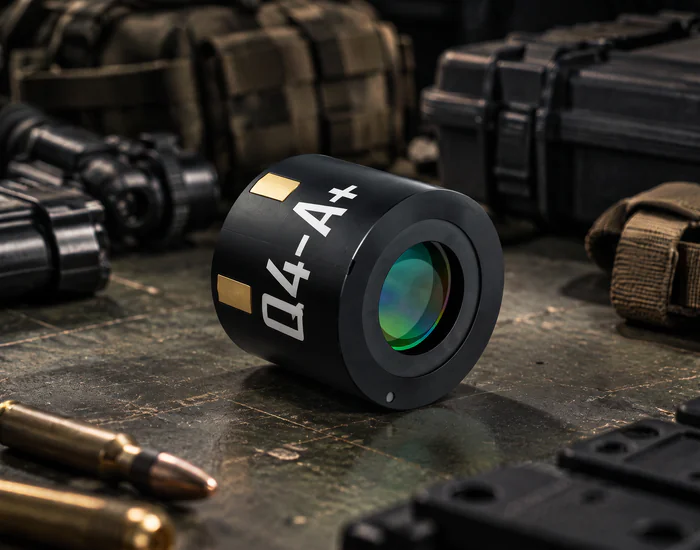
Q4-A MX10160 2-contact image intensifier tube
GEN2+ IIT

Q4-A

MX10160

2-contact

FOM
1,600–1,800
SNR
≥25
PHOTOCATHODE SENSITIVITY
750 μA/lm
PHOSPHOR
P43 / P45
INPUT VOLTAGE
2.2–3.4 V
WEIGHT
≤75 g
More Information
Q4-A MX10160 3-contact image intensifier tube
GEN2+ IIT

Q4-A

MX10160

3-contact

FOM
1,600–1,800
SNR
≥25
PHOTOCATHODE SENSITIVITY
750 μA/lm
PHOSPHOR
P43 / P45
INPUT VOLTAGE
2.2–3.4 V
WEIGHT
≤75 g
More Information
Q4-A MX11769 Pigtail cable image intensifier tube
GEN2+ IIT

Q4-A

MX11769

Pigtail cable

FOM
1,600–1,800
SNR
≥25
PHOTOCATHODE SENSITIVITY
750 μA/lm
PHOSPHOR
P43 / P45
INPUT VOLTAGE
2.2–3.4 V
WEIGHT
≤75 g
More Information

GEN3 Image intensifier tubes

3 CONFIGURATIONS

Specifications shown below are for the Q5-A grade.

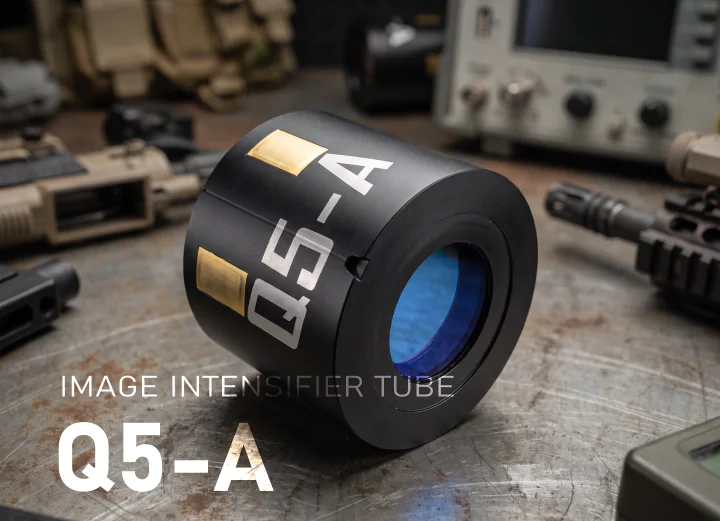
Q5-A MX10160 2-contact image intensifier tube
GEN3 IIT

Q5-A

MX10160

2-contact

FOM
2,200–2,400
SNR
≥35
PHOTOCATHODE SENSITIVITY
≥2,000 μA/lm
PHOSPHOR
P43 / P45
INPUT VOLTAGE
2.2–3.4 V
WEIGHT
≤75 g
More Information
Q5-A MX10160 3-contact image intensifier tube
GEN3 IIT

Q5-A

MX10160

3-contact

FOM
2,200–2,400
SNR
≥35
PHOTOCATHODE SENSITIVITY
≥2,000 μA/lm
PHOSPHOR
P43 / P45
INPUT VOLTAGE
2.2–3.4 V
WEIGHT
≤75 g
More Information
Q5-A MX11769 Pigtail cable image intensifier tube
GEN3 IIT

Q5-A

MX11769

Pigtail cable

FOM
2,200–2,400
SNR
≥35
PHOTOCATHODE SENSITIVITY
≥2,000 μA/lm
PHOSPHOR
P43 / P45
INPUT VOLTAGE
2.2–3.4 V
WEIGHT
≤75 g
More Information

PHOSPHOR COMPARISON

Green vs White Phosphor Image Intensifier Tubes
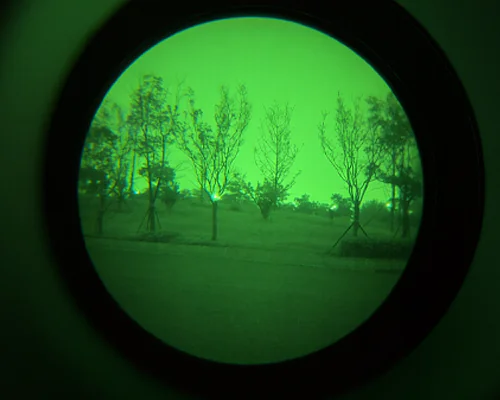
GREEN PHOSPHOR

  • CLASSIC LOOK
  • FAMILIAR VIEW
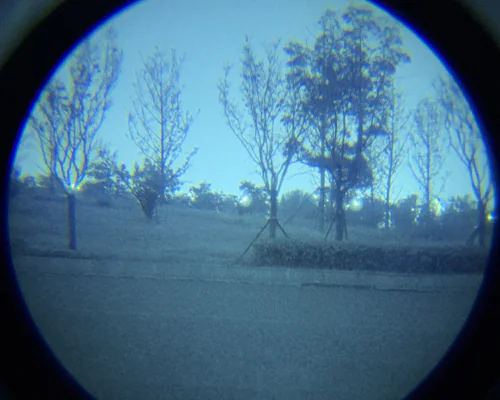
Green phosphor night vision image showing trees and a pathway

VIDEO COMPARISON

Watch on YouTube

WHITE PHOSPHOR

  • NATURAL LOOK
  • VIEWING COMFORT*
White phosphor night vision image showing trees and a pathway

* Phosphor preference and viewing comfort vary by user. Compare individual tube specifications as well as screen color.

BUYER SELECTION REFERENCE

Which IIT Should You Choose?

Start with housing compatibility, then compare tube grade, gain control and phosphor preference.

Swipe tables horizontally to compare all options.

01GEN2+ vs GEN3

Selection guide 01GEN2+ · Q4 series 02GEN3 · Q5 series
Choose this whenYou want a cost-conscious configuration for general observation and volume purchasing.You prioritize higher SNR and photocathode sensitivity for demanding low-light observation.
PhotocathodeMultialkali photocathodeGallium arsenide (GaAs) photocathode
FOM1,400–2,0002,000–2,400
SNR≥22 / ≥25 / ≥29≥32 / ≥35
Sensitivity650 / 750 / 1,000 μA/lm≥1,800 / ≥2,000 μA/lm
PhosphorP43 green / P45 whiteP43 green / P45 white
Gain & gatingNon-gated / gated options; external gain / brightness adjustment options.Gated power supply; external gain / brightness adjustment options.

02Choose Your Tube Interface

Interface guide 012-contact 023-contact 03Pigtail 04Lead-wire
ConnectionContact pads on the tube bodyThree contacts on the tube bodyA flexible cable / tail connectionLead-wire connection
Main reason to chooseContact-based integrationThree-contact connectionFlexible cable connectionOEM wiring flexibility
Performance effectChoose FOM and SNR separately.A third contact does not by itself improve image quality.A pigtail does not by itself improve image quality.Lead wires do not by themselves improve image quality.

Match the complete tube specification: package dimensions, image orientation, output window, contact or connector layout, and gain-control requirements. A matching model-family name alone does not establish drop-in compatibility.

03Recommended Starting Grades

Tube grade 01FOM / SNR 02Resolution 03Suggested purchasing priority
Q4-B1,400–1,600 / ≥22≥64 lp/mmCost-conscious general observation and volume purchasing.
Q4-A1,600–1,800 / ≥25≥64 lp/mmBalanced starting point for general-purpose monocular and binocular projects.
Q4-A+1,800–2,000 / ≥29≥64 lp/mmHigher Q4 grade when improved SNR is a purchasing priority.
Q5-B2,000–2,200 / ≥32≥64 lp/mmGEN3 option for buyers prioritizing higher SNR.
Q5-A2,200–2,400 / ≥35≥68 lp/mmHigher-performance GEN3 option for demanding low-light observation.

04System & Specification Guide

System / requirement 01Configuration 02Selection focus
PVS-14QCNV PVS-14: FOM 1,400–2,400+ tube options.Monocular configuration with manual gain control.
BNVD 1431 / BNVD 3150QCNV BNVD 1431 / BNVD 3150: GEN2+ / GEN3, FOM 1,400–2,400+ tube options.Binocular configuration; prioritize matched phosphor and balanced image appearance.
Binocular tube pairingMatching phosphor for both viewing channels.Compare gain, SNR, resolution and image appearance across the pair.
EBI / gain / blemishesQ4 / Q5 EBI: ≤0.25 μlx.Assess EBI under the same test conditions, alongside gain, halo and blemishes.

For a tube recommendation, provide your housing model and revision, preferred phosphor, target FOM / SNR, quantity and gain-control requirement.

The power of QCNV IIT

01

Stable Signal Amplification

QCNV IITs are engineered to deliver consistent low-light signal amplification with controlled noise levels. Optimized photocathode sensitivity and precision power supply ensure clear imaging performance in extremely dark environments.

02

High FOM Performance

With FOM ranges available from 1200 to 2200+, QCNV image intensifier tubes provide strong resolution and signal-to-noise balance. This allows night vision systems to achieve sharper target recognition and improved operational reliability.

03

Scalable Manufacturing

QCNV supports stable production and bulk supply of image intensifier tubes for night vision manufacturers and tactical equipment distributors. Consistent batch quality and reliable delivery make QCNV a dependable long-term partner.

let’s fight together

drop us a line